The project "Improving Childhood Cancer Care when Parents Cannot be There" is funded by the KWF Cancer Fund, former STW Foundation (now: NWO Domain TTW) and the TKI Life Sciences & Health and co-funded by 4 corporate partners. The project was initiated earlier this year at TU Delft; CWI and the Academic Medical Center (AMC) will follow in the summer and fall of 2017, respectively.
Reduce stress
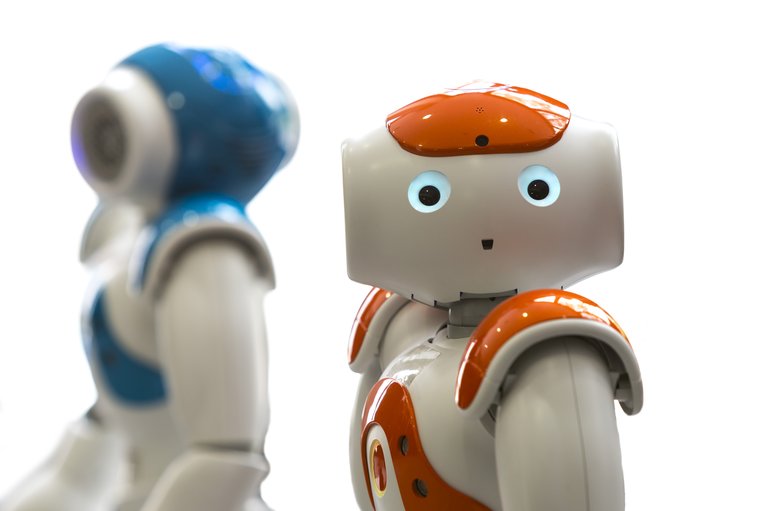
About 800 children in the Netherlands are under treatment for cancer every year. This is often a stressful and fearful experience for them. Treatments in which family members are not allowed to be present, for example because of radiation danger, they have to go through them alone. The stress that the children experience during this can complicate treatment, and can be a traumatic experience for the child with long-term adverse psychological effects. The research team wants to reduce this stress by developing a robotic friend for these children. This robot can stay with the child at all times, even when the parents are not present. It prepares the child for the medical procedures, determines the child's emotional state and distracts the child with games and conversation to reduce sadness and anxiety.
"To achieve this, groundbreaking research is needed in the areas of human-robot interaction and machine learning," said CWI research leader Peter Bosman. "For example, in the area of recognizing emotions in children, new results must be achieved to realize our goals. Also, the robot must remain interesting to the child, so its behavior must be adaptable to the child's needs and must not repeat itself."
Input from practice
CWI will work with corporate partner ASolutions to train the software with audio and video to infer the child's emotional state from children's facial expressions, speech and movements. TU Delft will develop innovative human-robot interaction software with company partners ASolutions, Focal Meditech, Cancer Health Coach and Brocacef. The Emma Children's Hospital AMC (EKZ), the Princess Máxima Center (PMC) and the Association of Parents, Children & Cancer (VOKK) are providing input from the field and are closely involved in the development and testing of the robot. Both centers will test the robot in children with cancer and measure the short- and long-term impact of the robotic friend by observing parents and children and asking about their experiences.
"We think a personal, social friend can help the child through difficult periods," Bosman said. "Ultimately, the less scary that hospital experience, the better the outcome of treatments and the higher the quality of life for the child."
About the grant
The project "Improving Childhood Cancer Care when Parents Cannot be There" is part of the STW-KWF Technology for Oncology program of the former STW Foundation and KWF Cancer Society, with the TKI Life Sciences & Health doubling the budget. The program challenges technical and medical scientists to enter into new collaborations with each other and with companies. This should lead to technical innovations for the prevention and treatment of cancer.