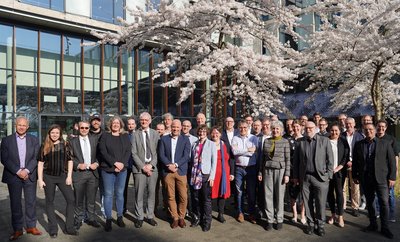
As of 1 August 2026, the QAL collaboration will come to an end following the completion of the term of the agreement between the participating organizations. This planned conclusion of their collaboration was jointly announced on 6 May by the QAL consortium partners. CWI is one of the founding partners of the Quantum Application Lab.

QAL was initiated in October 2021 with a Memorandum of Understanding / Letter of Commitment between six Dutch organizations, aiming to bring together industry and research to explore early applications of quantum computing. On 23 March 2022, this collaboration was formalized through the signing of a cooperation agreement.
Since then, multiple projects have been carried out with partners across different sectors, including organizations willing to take a leading role in the early stages of quantum application development. A first showcase was hosted during the 1-year anniversary in 2023.
These activities resulted in new insights and project outcomes related to quantum computing applications. In 2024, progress and results were discussed during the mid-term review of Quantum Delta NL (QDNL). More recently, project results have also been highlighted in the FD Special on quantum technology, including use cases with organizations such as Air France-KLM and Alliander.
During the International Year of Quantum in 2025, a final collaboration with the World Food Programme was started, with the first results to be shared soon.