Secure Multi-Party Computation (MPC) makes it possible for organizations like banks, hospitals or government agencies to perform joint computations while keeping their individual data private. In theory this works in any network. Current methods, however, are only practical in simple, controlled settings. “They don’t scale well with the number of parties”, says Lisa Kohl, researcher in CWI’s Cryptology group. “The required communication and computation grow so quickly that it becomes impractical. This gets even worse if not all parties are connected, or the network is dynamic, for example when parties come and leave. Sometimes the network structure itself is privacy-critical information and should remain hidden. Imagine vehicle-to-vehicle networks, where knowing which cars communicate reveals where they are relative to each other.”
More scalable
This is why in practice, MPC is mostly used with a handful of parties, usually two or three. “The goal of my Vidi is to develop techniques that make MPC more scalable, not only in static settings, but also in more complex networks where parties join and leave, not all parties are connected, or the network structure must remain hidden.” To achieve this, Kohl will develop new mathematical tools. Potential applications include privacy-preserving analytics and federated learning, allowing parties to benefit from shared data without compromising individual privacy.
About the Vidi grant
Vidi grants are awarded annually by NWO to researchers who are developing their leadership skills. The funding enables them to develop their own research line and establish or expand a research group.
NWO received 712 preliminary applications in this round, followed by 265 full proposals: 139 from women and 126 from men. Of the 109 grants awarded, 64 went to women and 45 to men. The success rates at the full proposal stage were 46% and 36%, respectively.
About Lisa Kohl
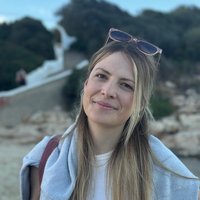
Lisa Kohl completed her PhD at Karlsruhe Institute of Technology in 2019 and joined CWI’s Cryptology group in 2020. Her research explores new directions in secure computation, with the aim of developing practical protocols that remain secure against attacks using quantum computers.
In 2023, she received an NWO Veni grant for research into low-complexity cryptography.
